
When individuals prevail in State matters
When individuals prevail in State matters
Por: Pezan Shaban - Esta dirección de correo electrónico está siendo protegida contra los robots de spam. Necesita tener JavaScript habilitado para poder verlo.
Emil Skatt - Esta dirección de correo electrónico está siendo protegida contra los robots de spam. Necesita tener JavaScript habilitado para poder verlo.
Emilian Badea - Esta dirección de correo electrónico está siendo protegida contra los robots de spam. Necesita tener JavaScript habilitado para poder verlo.
Danna Isabella Parra – Esta dirección de correo electrónico está siendo protegida contra los robots de spam. Necesita tener JavaScript habilitado para poder verlo.
March 2026
A reflection on the delicate balance between State and personal interest in high stake negotiations as representatives of the URRS in the context of the Cuban Missile crisis..
What happens when the faith of all humanity is at stake at the negotiation table? This blog post aims to reflect on this very question by discussing our role as the USSR delegation in Cuban Missile crisis simulation conducted within the framework of a Foreign Policy Analysis (FPA) class. Our delegation was composed by 4 members: Soviet leader Nikita Khrushchev represented by Emilian Badea, Primary Military Advisor represented by Emil Skatt, KGB intelligence agent represented by Pezan Shaban and Foreing Minister Andrei Gromyko represented by Danna Parra. The main objective of this activity was to put into practice what we had previously learned about Allison’s Graham levels of analysis: Rational Actor Model I (states act as unitary, logical decision-makers), Organizational Process Model II (decisions result from standard procedures of organizations), and Bureaucratic Politics Model III (outcomes arise from bargaining among competing officials).
Before we began negotiating with the other delegations (United States and Cuba), we had to established collective goals as a delegation as well as carefully revise each of the private individual missions assigned to us by the professor. By the end of the game, the accomplishment of both of those missions would determine the winners. Hereon we will present what this scenario taught us about actors, threats, negotiations and luck in foreign policy.
Due to multiple simultaneous negotiations, the environment was highly dynamic and somewhat chaotic. Our collective objective was to manage the escalating crisis with the United States while maintaining Soviet interests, supporting Cuba, and ultimately avoiding nuclear war. This required us to manage several conversations at once while thinking strategically about both our goals as a team as well as our individual objectives which some of us (Nikita) accomplish to a much further degree than others.
Leadership played a crucial role, especially with Nikita Khrushchev. He focused on diplomacy, ultimately completing his personal objectives. Perhaps the most significant achievement was negotiating the initial withdrawal of Cuban missiles with Fidel Castro. This was reached relatively quickly through persuasion and informal diplomacy, as it was something Cuba only agreed to do once we had agreed to continue military support in secrecy. This moment highlighted the importance of trust, communication, and framing in negotiations, demonstrating that diplomatic outcomes often depend on material interests as much as on how proposals are presented. We also believe this was one of our most coherent actions because each of us acted in representation of our organizational goals, even with personal interests in mind, similar to what Graham II model of analysis describes.
Negotiations with the US proved more difficult as their delegation was reluctant to communicate. Initially, direct dialect with President John F. Kennedy was not possible. However, a backchannel strategy through his brother, allowed the negotiation of a mutual withdrawal agreement that even reached the description Nikita needed as a “man of peace”. However, this personal and diplomatic approach adopted by Nikita caused some tension between the group with Military and KGB having to defend a more aggressive approach and Gromyko trying to balance out the conflict by diplomatic means. The goal could also be achieved because the USA appeared to be primarily concerned with security and the removal of Soviet missiles, illustrating a realist logic in which states prioritize strategic stability and security over symbolic concessions.
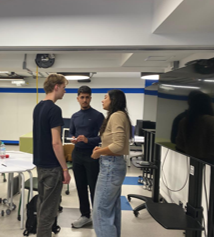
Internal USSR dynamics also played a major role in the outcomes. Each of us pursued distinct priorities that sometimes conflicted with one another, and we often prioritized our own missions, weakening internal coherence. Despite this, we ultimately succeeded in making a diplomatic resolution. Military Advisor, for example, initially favored a more aggressive strategy, exploring the possibility of escalating military action. Likewise, Gromyko was mostly true to her role, constantly advocating for negotiation and compromising as the best path to avoiding war as well as the defense of the missiles as a purely defense strategy.
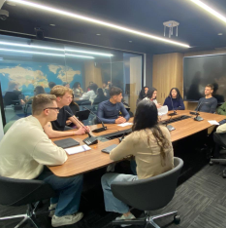
From KGB Intelligence perspective, the simulation portrayed the importance of intelligence work in foreign policy. He had to operate through covert actions and secret missions, gathering information and influencing events behind the scenes. Operating in this role required strategic thinking, and careful timing. Nonetheless, this role ended up coming second to what some of us thought to be our approach, collective teamwork. We recognize that for most of us (Definitely not for Nikita) at least one of our covert missions ended up in the background. Largely due to time constraints and the fast pace of negotiations, demonstrating the difficulty of managing both private and public or “institutional” agendas.
Our works to achieve our secret missions illustrate how decisions are rarely the product of a single unified actor or even a result to the international system. Instead, they emerge from interactions between different institutions, personalities, and strategic preferences. This dynamic also reflects Grahams’s model III about bureaucratic politics and how this influences decisions and policy outcomes as a result of bargaining and competition among decision-makers rather than purely rational calculations.


Probably one of the most interesting aspects of the simulation was the role of secrecy and informal diplomacy. Many of the most important negotiations occurred through private conversations and backchanneling, seen in actions such an arrest of Che Guevara which remained secret through almost two-thirds of the simulation. This mirrored the real Crisis, where secret diplomacy played a decisive role in reaching a peaceful resolution. This was accompanied by another interesting part of the game which involved State leaders throwing dice to determine their power of negotiation, represented in little chips, introducing an element of unpredictability. At first, we experienced poor luck, but later Nikita took a calculated risk and recovered negotiation power through gambling for additional chips. This illustrates that decision-making is not always fully rational or predictable and may be influenced by uncertainty and risk-taking behavior.
As we reflect on this activity, one thing becomes clear individuals matter, even more so than States in some cases. Although Allison’s 3 models talk about the importance of rational decision making and organizational structures, we all agree that both the real Cuban crisis and the simulation put a great deal of responsibility on the role of people, personalities and split second decision-making in which those aspects are left at aside and personal interest and beliefs are protagonist. If this was not the case, scenarios would probably be different, with nuclear confrontation as the likeliest scenario. Aside from this, the dynamic of the activity displayed something that is hard to see in real life: backchanneling and informal communication. If these dynamics had not taken place, we would not have achieved any of our goals (collective or individual). In the end, what the Cuban crisis teaches us is that outcomes are shaped by the individuals, their ambitions, their disagreements, the tension between collective interests and personal objectives and the ultimate desire of becoming relevant in an ever-changing international realm.

